
Biggest Upset In Major League History? Visit This Greenville, Texas Hidden Legend


Tucked away on a quiet street in Greenville, the story of Majors Stadium feels like something straight out of a baseball dream—equal parts small-town pride and big-league history.
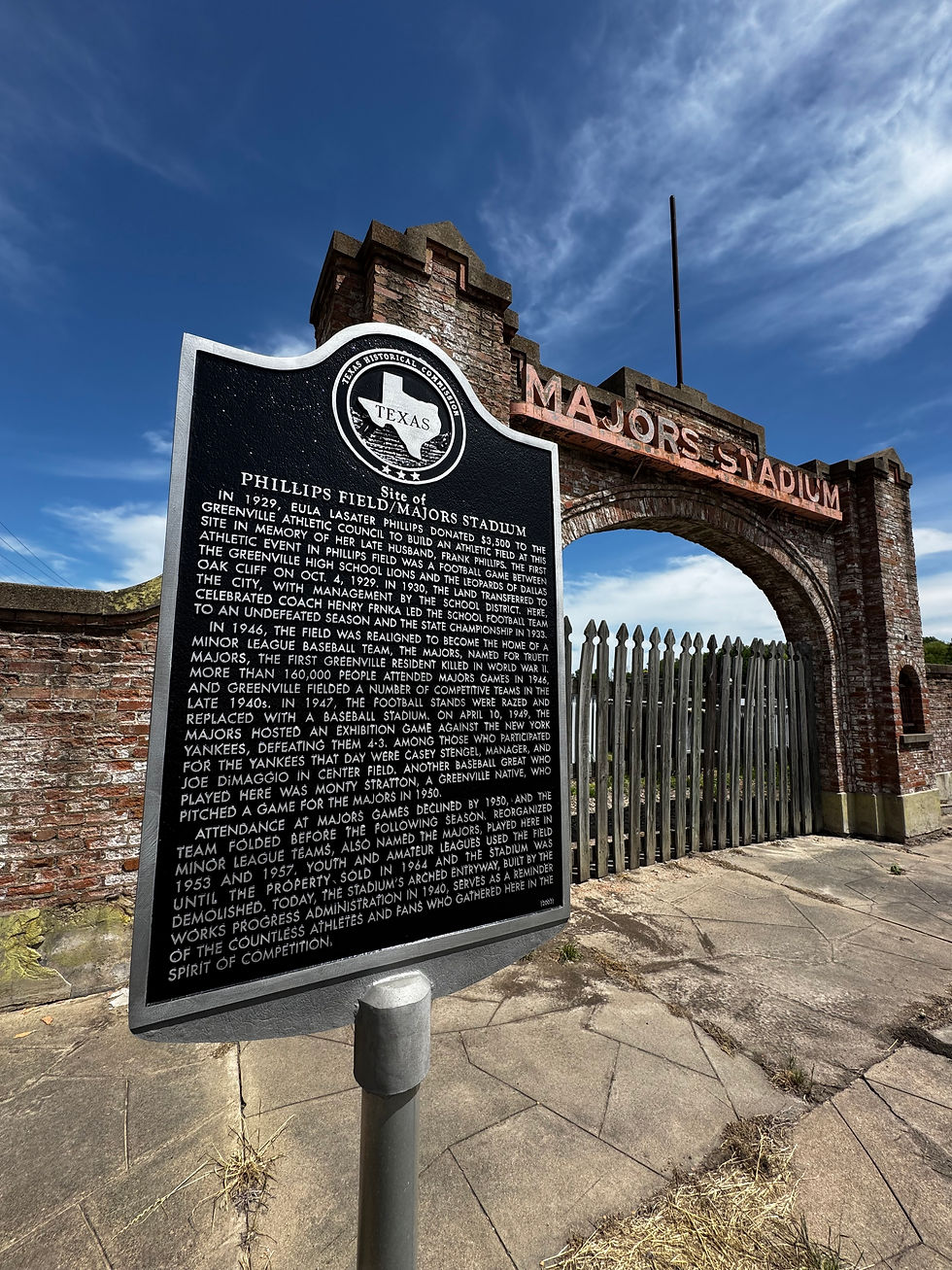
Originally opened in 1929 as Phillips Field, the venue began its life hosting high school football games, including early contests featuring local teams and even a state championship run in the 1930s. But after World War II, the field was transformed into a baseball park and reborn as Majors Stadium, named in honor of fallen war hero Truett Majors.
By 1946, it had become home to the Greenville Majors, a minor league team that drew large crowds and turned the small city into a lively baseball hub. At its peak, thousands of fans poured through the gates, creating an atmosphere that rivaled much larger cities.
Then came the moment that cemented the stadium’s place in baseball lore.
On April 10, 1949, the hometown Majors faced the New York Yankees in an exhibition game. The Yankees lineup included legends like Joe DiMaggio, under the leadership of manager Casey Stengel. Against all odds, the minor league squad defeated the major league powerhouse 4–3—a David-versus-Goliath victory that still echoes through baseball history.
Other notable figures also passed through the ballpark, including pitcher Monty Stratton, whose remarkable comeback story later inspired the film The Stratton Story.
But like many small-town ballparks, Majors Stadium’s glory didn’t last forever.
Attendance declined in the 1950s, teams came and went, and by 1964 the stadium was sold and ultimately demolished. What remains today is only a fragment of its former self: the arched gateway, ticket windows, and a small structure that once supported the field—quiet reminders of roaring crowds and summer nights under the lights.
You can still visit the site at 2010 Jordan Street in Greenville, Texas, near Houston Street—an unassuming landmark marking extraordinary history. The location is even featured on sites like Atlas Obscura and Roadside America, where it’s celebrated as a hidden gem of America’s baseball past.
Today, there’s no diamond, no stands, and no cheering crowd—just a gateway. But if you stand there long enough, you can almost hear the crack of the bat from that improbable day when a small-town team beat the Yankees.


Comments